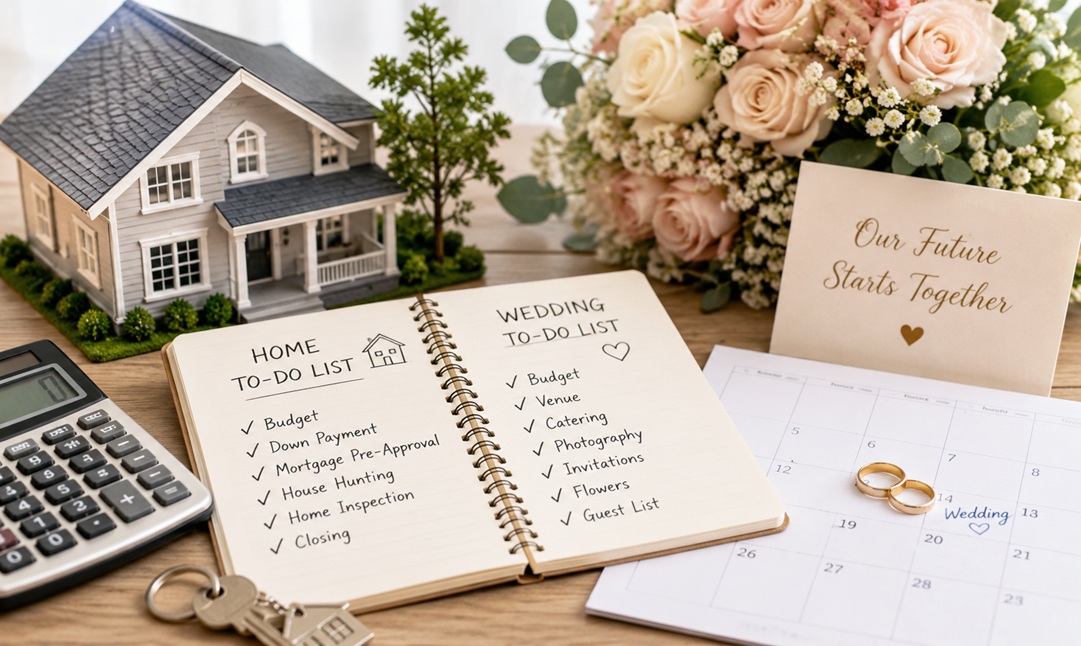
Wedding planning while buying a house is one of the most financially and emotionally demanding combinations of life events most couples will face simultaneously. Both require significant deposits, detailed logistics, and months of coordination. The most important first step is to separate the finances entirely — maintain distinct savings accounts and budgets for the wedding and the house purchase. Trying to fund both from the same pool of money is the primary reason couples run into trouble.
The Core Problem: Two Large Financial Commitments at the Same Time
A wedding deposit for the venue is typically due six to eighteen months in advance. A mortgage deposit needs to be sitting in your account, untouched, for a period your lender specifies. These timelines often collide.
Beyond money, there is the cognitive load. Choosing between wedding caterers and negotiating with estate agents on the same afternoon is genuinely exhausting. Most couples underestimate how much mental bandwidth each process demands independently.
The Solution: Stagger If You Can, Separate If You Cannot
If you have any flexibility on timing, stagger the two events. Completing the house purchase before finalising major wedding commitments is generally the safer financial order. Mortgages are sensitive to credit checks and debt levels — putting large deposits on credit cards or taking out personal loans to fund the wedding can affect your borrowing capacity.
If timing cannot be staggered, the next best strategy is strict financial separation. Keep wedding funds and house funds in different accounts. Do not borrow from one to fund the other. Build both budgets independently and treat each as non-negotiable.
What Each Process Actually Needs From You
The House Purchase
The mortgage application typically requires proof of savings held for a specific period — often 90 days. Your lender will assess regular income and outgoings. Avoid large irregular payments in the months before application. Large cash withdrawals or sudden new direct debits can trigger questions.
The Wedding
The biggest upfront cost is usually the venue deposit, often 25 to 30 percent of the venue cost. Suppliers like photographers and caterers also require deposits well in advance. The bulk of wedding costs cluster in the final six to eight weeks.
Regional Differences Worth Knowing
In the US, a typical mortgage deposit is 20 percent for a conventional loan, though FHA loans can go as low as 3.5 percent. Many first-time buyer programs exist at the state level that reduce the deposit requirement. If you are in a competitive housing market like California or New York, a larger deposit improves the offer.
In the UK, the Help to Buy ISA and Lifetime ISA can both be used toward a first home deposit and attract a government bonus. Withdrawing from a LISA for any non-property purchase before 60 incurs a penalty, so keep wedding savings entirely separate.
In Canada, the First Home Savings Account (FHSA) launched in 2023 offers tax-deductible contributions and tax-free withdrawals for eligible first home purchases. Again, this account should not be mixed with wedding savings.
In Australia, the First Home Super Saver Scheme allows voluntary super contributions to be withdrawn for a first home deposit. This takes time to process, so planning ahead is essential.
Frequently Asked Questions
Will wedding spending affect my mortgage application?
It can. Large deposits to suppliers or catering companies showing up as irregular outgoings in your bank statements may prompt questions from lenders. If possible, make major wedding payments from an account separate from the one your lender is reviewing.
Should we buy the house or have the wedding first?
From a purely financial standpoint, securing the mortgage before committing major wedding funds is lower risk. Your borrowing capacity is fixed before wedding spending affects your stated outgoings and savings balances.
How do we keep stress manageable across both?
Assign primary decision-making responsibility to one partner for each process where possible. Having two people need to be equally across both simultaneously leads to constant consultation fatigue. One person takes point on the house, the other on the wedding, with joint check-ins weekly.